|
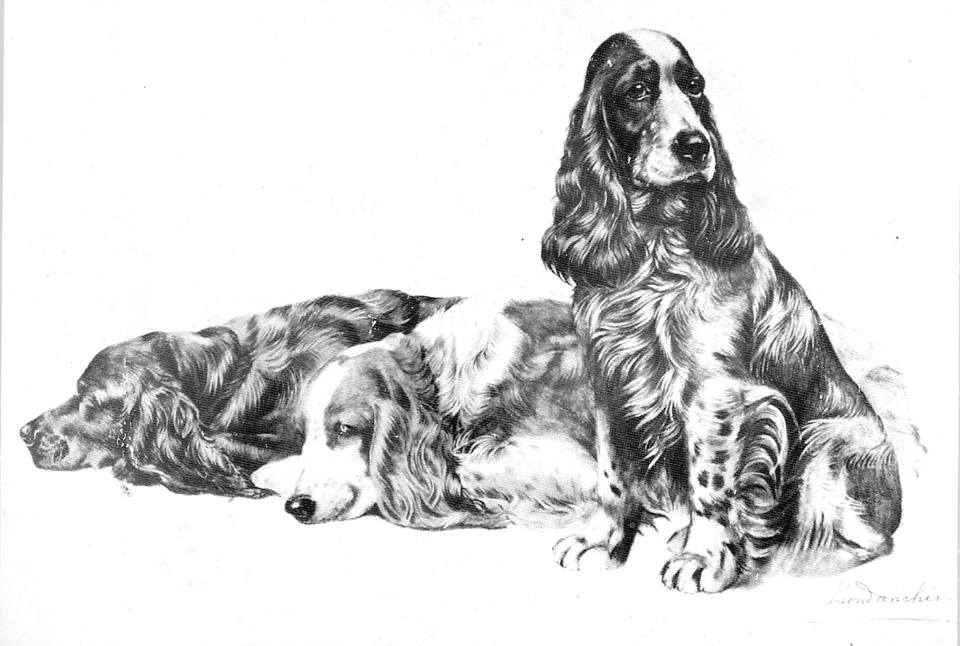
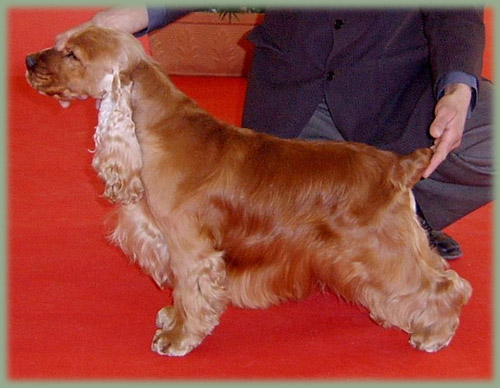 Shavian Hey Presto "Of all the dogs that are so sweet, The Spaniel is the most complete; Of all the Spaniels, dearest far The little loving Cockers are". (The More I See of Men - E.V.Lucas)
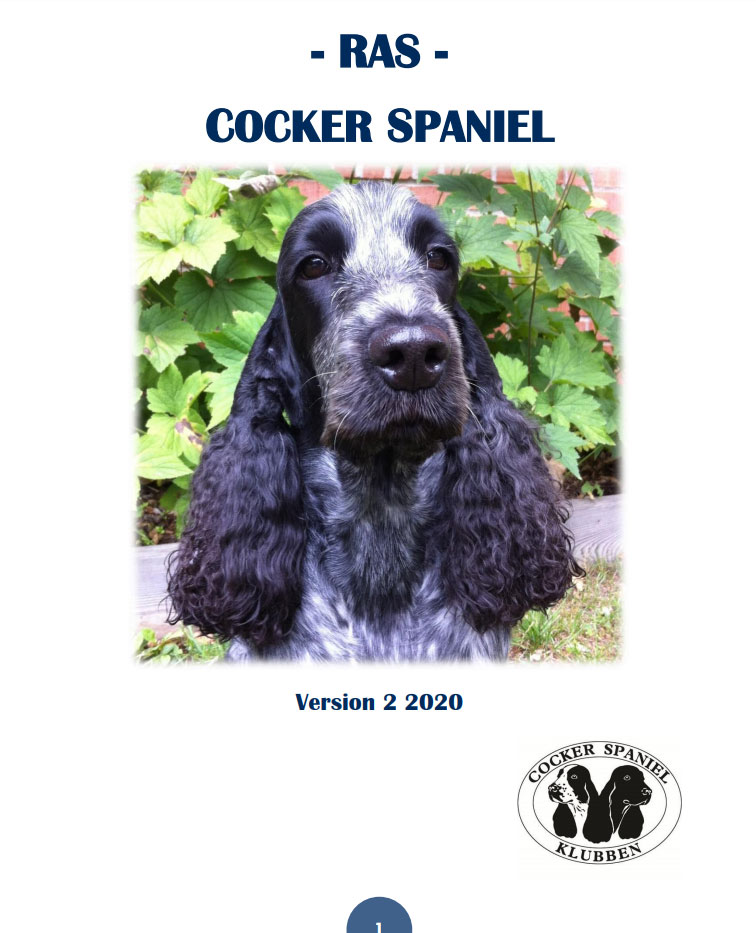
En rasspecifik avelsstrategi (RAS) är en handlingsplan för aveln inom en specifik ras. SKKs Avelspolicy anger målen, strategin beskriver vägen dit. På Kennelfullmäktige 2001 fattades beslut om att en sådan ska upprättas för varje hundras. RAS rasspecifik
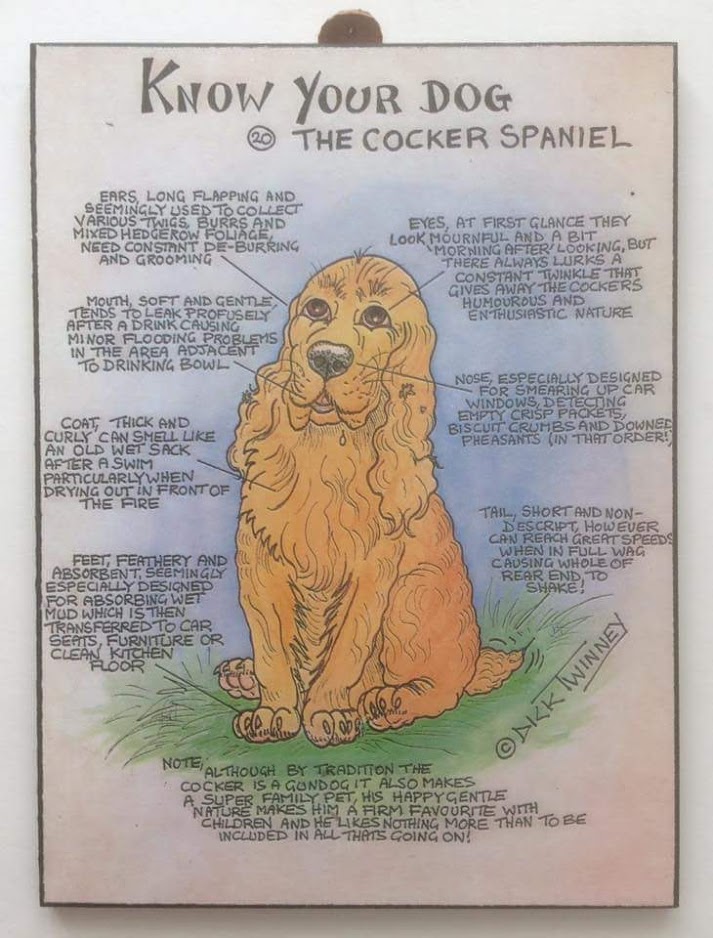
Sammanfattning: Cockern som ras är ursprungligen en stötande och apporterande fågelhund, (finns även en renodlad jaktvariant). Cockern fungerar utmärkt som sportig och aktiv sällskapshund. En alert hund som gärna jobbar tillsammans med sin ägare. Läraktig, vänlig, livlig, lekfull och ibland egensinnig. Har stort behov av närhet och kroppskontakt. Cockern kräver en mer fast hand än vad man kan tro av det sockersöta utseendet. Trivs ihop med andra hundar. Lägger lätt på hullet om den inte får tillräckligt med motion - eller för mycket mat. Kräver mer motion än vad den ser ut att göra. Uppskattar uteliv. Stor hund i litet format. En användbar allround-hund. Cockern ska vara en positiv och öppen hund som älskar allt och alla. Kontrollera gärna mentaliteten hos föräldradjuren. När det gäller lämplighet i barnfamilj gäller som vanligt att detta beror på barnfamiljen. Cockerns hälsoprogram inom SKK är PRA, PNP och HD. Ingen av defekterna är dock särskilt vanlig. Eventuella öronproblem är oftast en skötselfråga (hygien/trimning). Cockern bör trimmas ca 3 ggr/år. Man klipper tassar, klor och runt hörselgången oftare. Kammas/borstas varje vecka. En cocker spaniel blir ca 10-12 år.
Svanskupering är förbjuden i Sverige, Norge, Danmark, Finland, Tyskland, Schweiz och många andra länder och senare även även UK
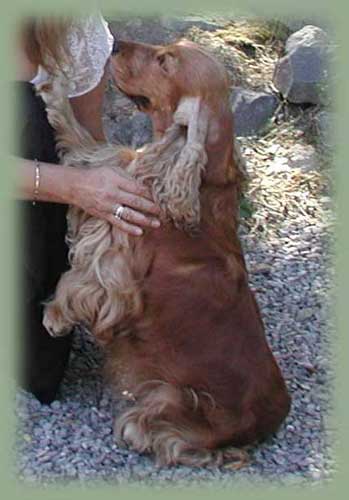
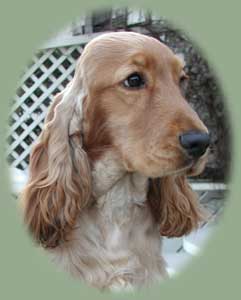
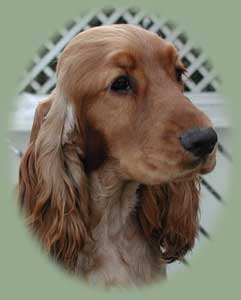
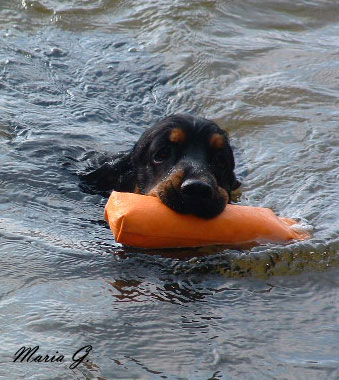
Här är tre av våra hundar med! Det är Wille, Laban, Sigge och Tessan
Around the Dog World Extras - Crufts Best in Show judge - Frank Kane Interview Full THE COCKER SPANIEL BREED STANDARD
Breed StandardLast updated December 2011
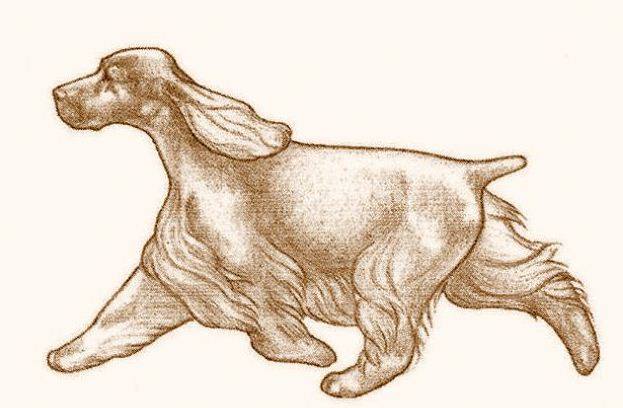
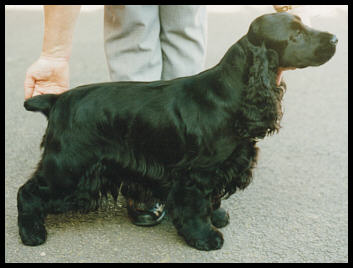
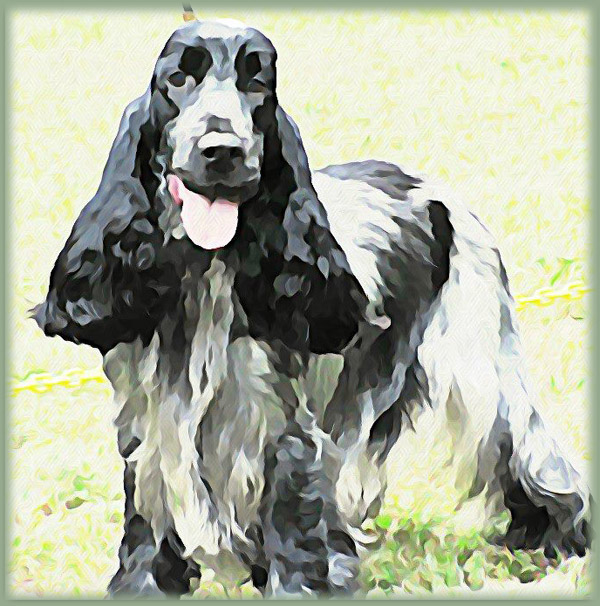
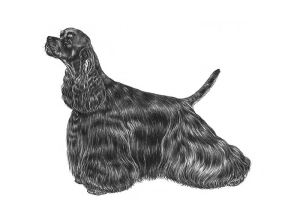
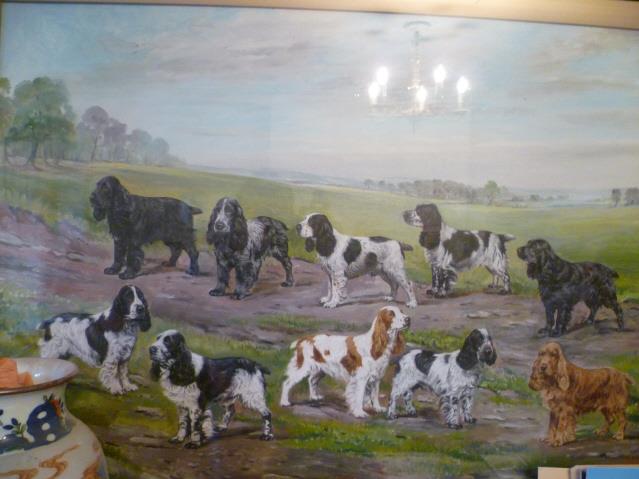
A Breed Standard is the guideline which describes the ideal characteristics, temperament and appearance including the correct colour of a breed and ensures that the breed is fit for function. Absolute soundness is essential. Breeders and judges should at all times be careful to avoid obvious conditions or exaggerations which would be detrimental in any way to the health, welfare or soundness of this breed. From time to time certain conditions or exaggerations may be considered to have the potential to affect dogs in some breeds adversely, and judges and breeders are requested to refer to the Breed Watch section of the Kennel Club website here http://www.thekennelclub.org.uk/services/public/breed/watch for details of any such current issues. If a feature or quality is desirable it should only be present in the right measure. However if a dog possesses a feature, characteristic or colour described as undesirable or highly undesirable it is strongly recommended that it should not be rewarded in the show ring. General AppearanceMerry, sturdy, sporting; well balanced; compact; measuring approximately same from withers to ground as from withers to root of tail. CharacteristicsMerry nature with ever-wagging tail shows a typical bustling movement, particularly when following scent, fearless of heavy cover. TemperamentGentle and affectionate, yet full of life and exuberance. Head and SkullSquare muzzle, with distinct stop set midway between tip of nose and occiput. Skull well developed, cleanly chiselled, neither too fine nor too coarse. Cheek bones not prominent. Nose sufficiently wide for acute scenting power. EyesFull, but not prominent. Dark brown or brown, never light, but in the case of liver, liver roan and liver and white, dark hazel to harmonise with coat; with expression of intelligence and gentleness but wide awake, bright and merry; rims tight. EarsLobular, set low on a level with eyes. Fine leathers extending to nose tip. Well clothed with long, straight silky hair. MouthJaws strong with a perfect, regular and complete scissor bite, i.e. upper teeth closely overlapping lower teeth and set square to the jaws. NeckModerate in length, muscular. Set neatly into fine sloping shoulders. Clean throat. ForequartersShoulders sloping and fine. Legs well boned, straight, sufficiently short for concentrated power. Not too short to interfere with tremendous exertions expected from this grand, sporting dog. BodyStrong, compact. Chest well developed and brisket deep; neither too wide nor too narrow in front. Ribs well sprung. Loin short, wide with firm, level topline gently sloping downwards to tail from end of loin to set on of tail. HindquartersWide, well rounded, very muscular. Legs well boned, good bend of stifle, short below hock allowing for plenty of drive. FeetFirm, thickly padded, cat-like. TailSet on slightly lower than line of back. Must be merry in action and carried level, never cocked up. Previously customarily docked. Docked: Never too short to hide, nor too long to interfere with, the incessant merry action when working. Undocked: Slightly curved, of moderate length, proportionate to size of body giving an overall balanced appearance; ideally not reaching below the hock. Strong at the root and tapering to a fine tip; well feathered in keeping with the coat. Lively in action, carried on a plane not higher than level of back and never so low as to indicate timidity. Gait/MovementTrue through action with great drive covering ground well. CoatFlat, silky in texture, never wiry or wavy, not too profuse and never curly. Well feathered forelegs, body and hindlegs above hocks. ColourSolid colours Black; red; golden; liver (chocolate); black and tan; liver and tan. No white allowed except a small amount on chest. Particolours Bicolours: Black and white; orange and white; liver and white; lemon and white. All with or without ticking. Tricolours: Black, white and tan; liver, white and tan. Roans: Blue roan; orange roan; lemon roan; liver roan; blue roan and tan; liver roan and tan. Any colour or marking other than the above is undesirable. SizeHeight approximately: dogs: 39-41 cms (151/2-16 ins); bitches: 38-39 cms (15-151/2 ins). Weight approximately: 13-14.5 kgs (28-32 lbs). FaultsAny departure from the foregoing points should be considered a fault and the seriousness with which the fault should be regarded should be in exact proportion to its degree and its effect upon the health and welfare of the dog and on the dog’s ability to perform its traditional work. NoteMale animals should have two apparently normal testicles fully descended into the scrotum. *Note for prospective puppy buyersSize – the Kennel Club Breed Standard is a guide and description of the ideal for the breed; the Size as described does not imply that a dog will match the measurements given (height or weight). A dog might be larger or smaller than the Size measurements stated in the Breed Standard.
 |
||||||||||||||||||||||||||||||||||||||||||||||||||||||||||||||
|
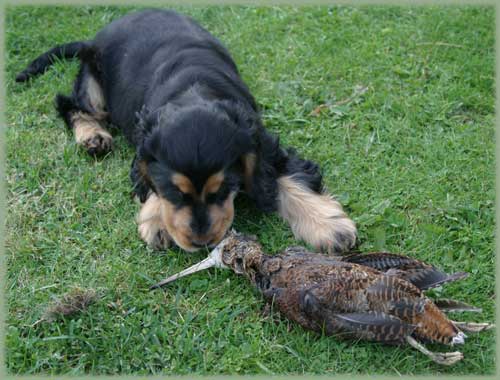
The English Cocker Spaniel is a breed of gun dog. The name cocker comes from the fact that the breed originally hunted woodcock. It is one of several varieties of spaniel and somewhat resembles its American cousin, the American Cocker Spaniel, although it's closer to the working-dog form of the Field Spaniel and the Springer Spaniel. Outside the US, the breed is usually known simply as the Cocker Spaniel, as is the American Cocker Spaniel within the US. The word "spaniel", means a "dog of Spain". It is generally accepted that Spaniels are traced back to Spain for their development as a hunting and retrieving breed of dog. From Spain the dogs were transported, traded, given away as gifts, or simply traveled with their masters to England. Initially, spaniels in England were divided among land spaniels and water spaniels. The differentiation among the spaniels that led to the breeds that we see today did not begin until the mid 1800’s. Before 1892 cocker spaniels were not specifically bred as such or recognized as a separate breed by the English Kennel Club. One litter of springer spaniels would produce three types of dogs (springers, Sussex, and cockers). Bench shows in England were confusing as pups would be entered as cockers one year and springers the next year as they grew larger. During the 1850’s and 60’s other dogs types of cockers were recorded. There were Welsh Cockers and Devonshire Cockers. The first Cocker strain to become well known and to make definite strides toward the Cocker's recognition as a separate and distinct breed in England, was the "Obo" kennel of Mr. James Farrow. The English Cocker Spaniel had been imported from Great Britain to North America and Canada in the 1870's and the English and American Cocker Spaniel had identical histories up until around the 1930's. They were considered one breed of spaniel. When the English Cocker Spaniel was introduced to North America, it originally was for the purpose of hunting small birds, such as pheasant, grouse, and woodcock. The English Cocker Spaniel under went significant changes within a number of kennels during the 1920's and 1930's, to achieve a different type of dog. There were those breeders who were breeding for conformation, or show purposes, and those who were breeding for field work. The result was an "Americanized" Cocker Spaniel, slightly smaller, 1 to 2 inches shorter at the withers, a smaller head and muzzle, a more dramatic down-slope of the top line, and a longer, silkier, more dense coat of hair. The year 1935 brought about a dramatic change in that the breeders who favored the English style, formed a separate club from the original American Cocker Spaniel Club (established in 1881), and agreed not to interbreed their lines with this new "Americanized" variety. American Cockers have been a highly popular American breed since the 1940s, occupying the top position in number of American Kennel Club registrations from 1940-1952. The breed declined a bit in popularity and then resurged to #1 in registrations from 1984-1990. Since then, the breed's popularity has declined. Some say the reason is puppy mills churning out poor quality dogs with health and temperament problems, while others say it was show breeders who bred the sporting and companion qualities out of the American Cocker in favor of a certain style of looks that are falling out of favor with the American public, but it is probably a combination of both. In the last fifteen years, dedicated breeders have been bringing the American Cocker back to his original loving, stable, loyal nature. When selecting a puppy, be sure to only buy from a reputable breeder that will allow you to see the parents. Puppies in the pet store window may be cute, but may very well cost you a great deal of vet bills and heart-ache. |
Cockrar man kan man inte få nog av.......
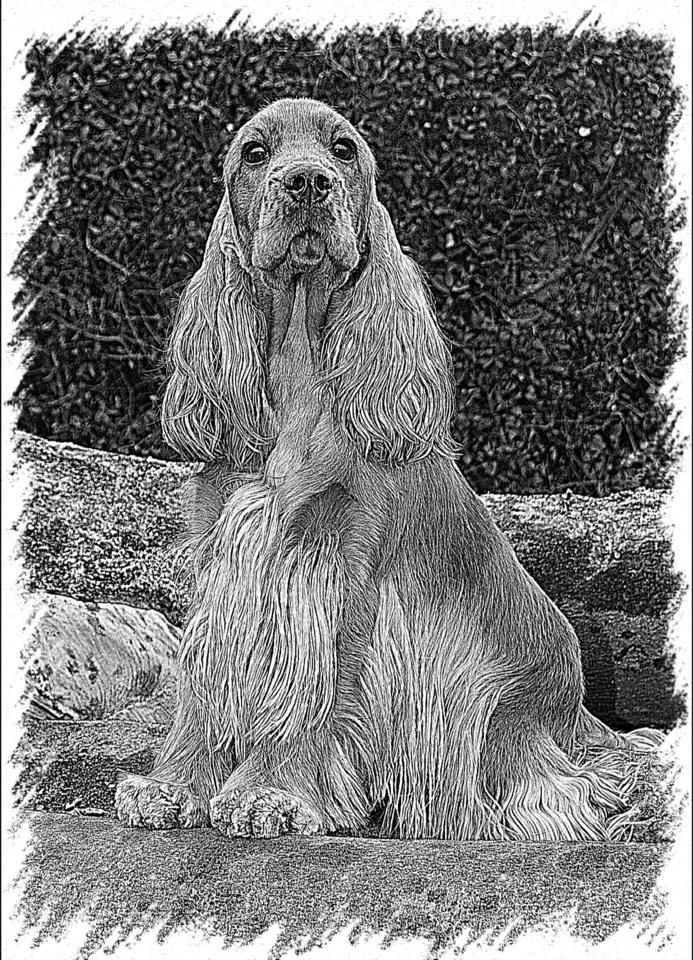
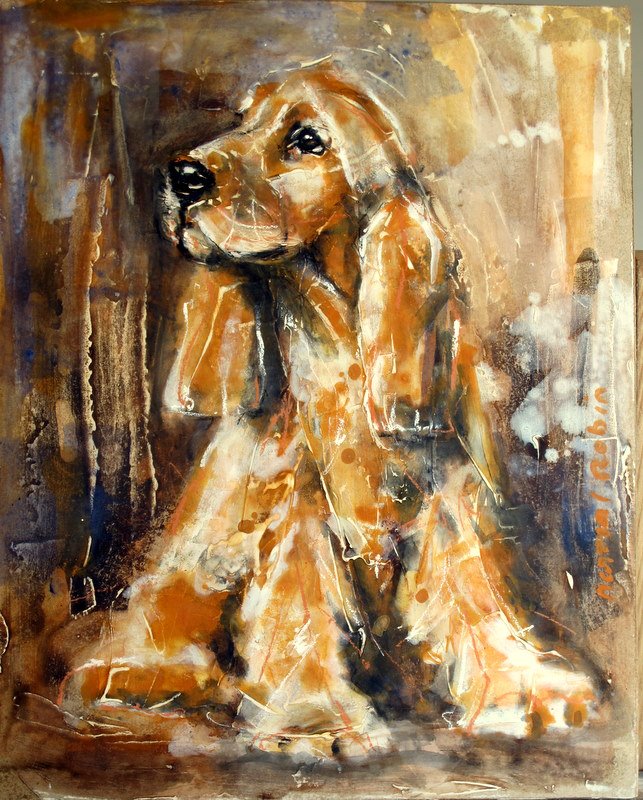
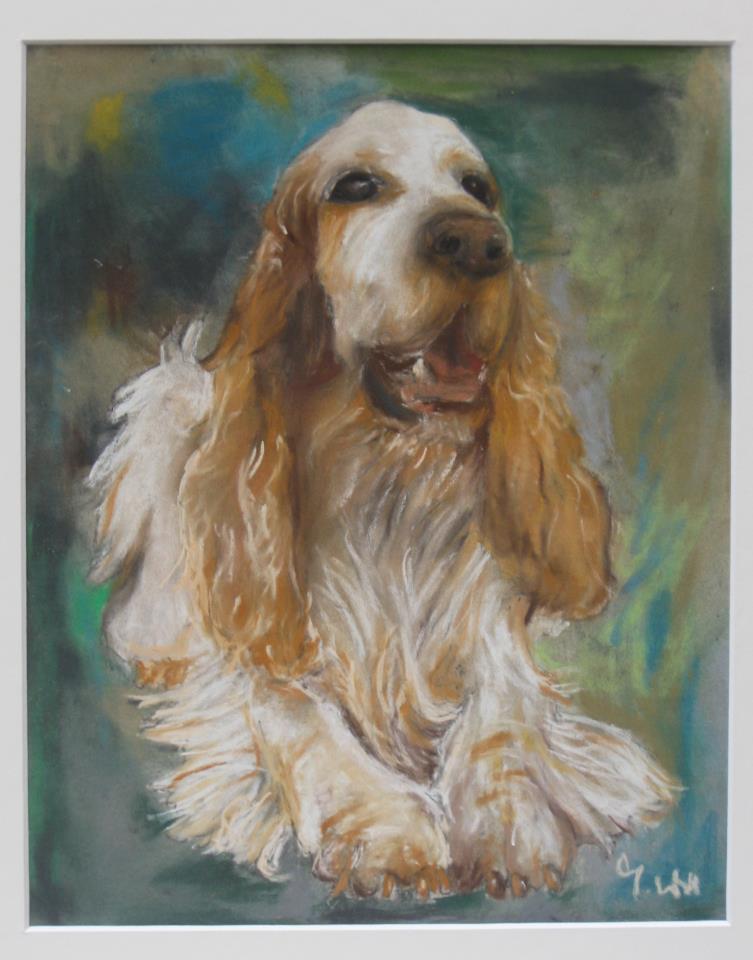
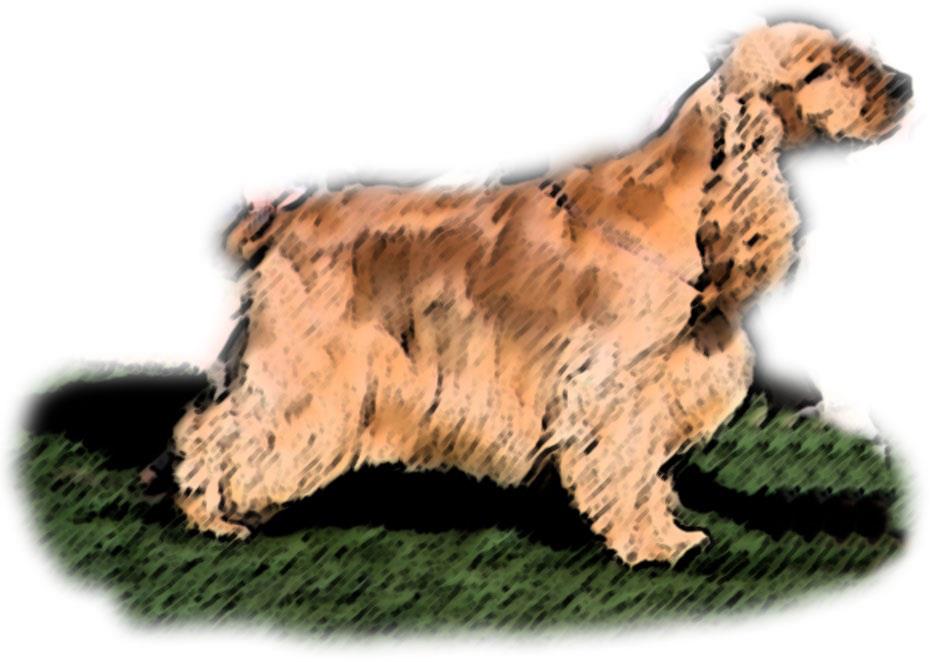
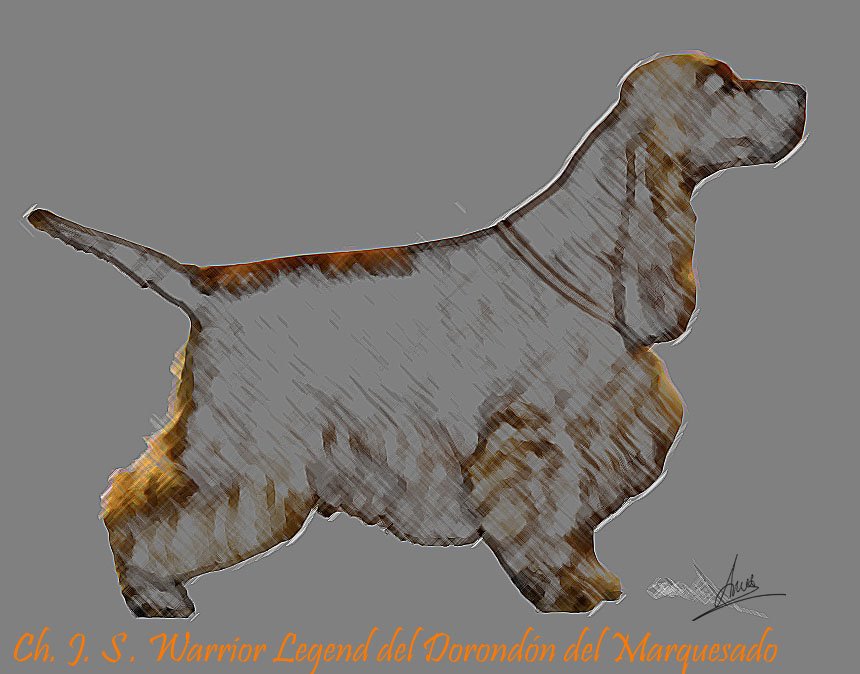

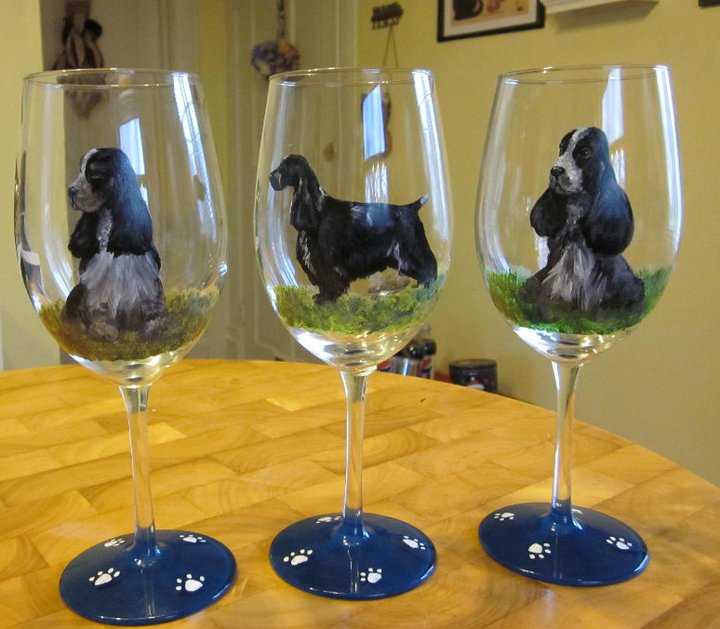
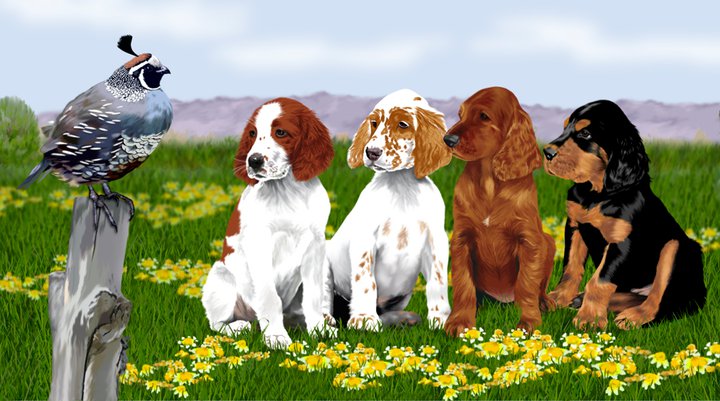
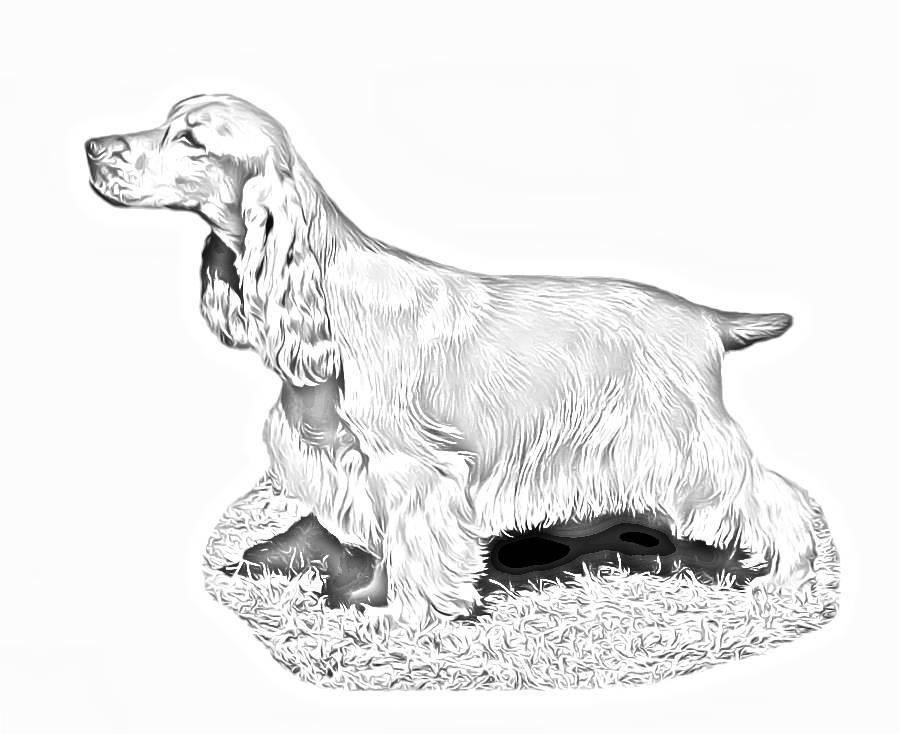
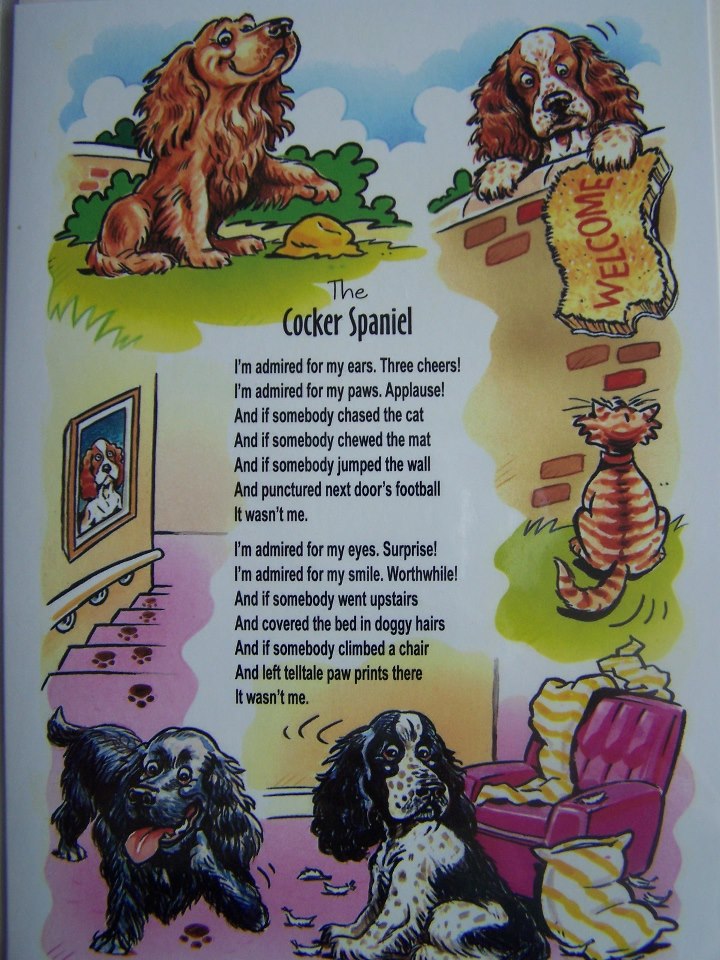
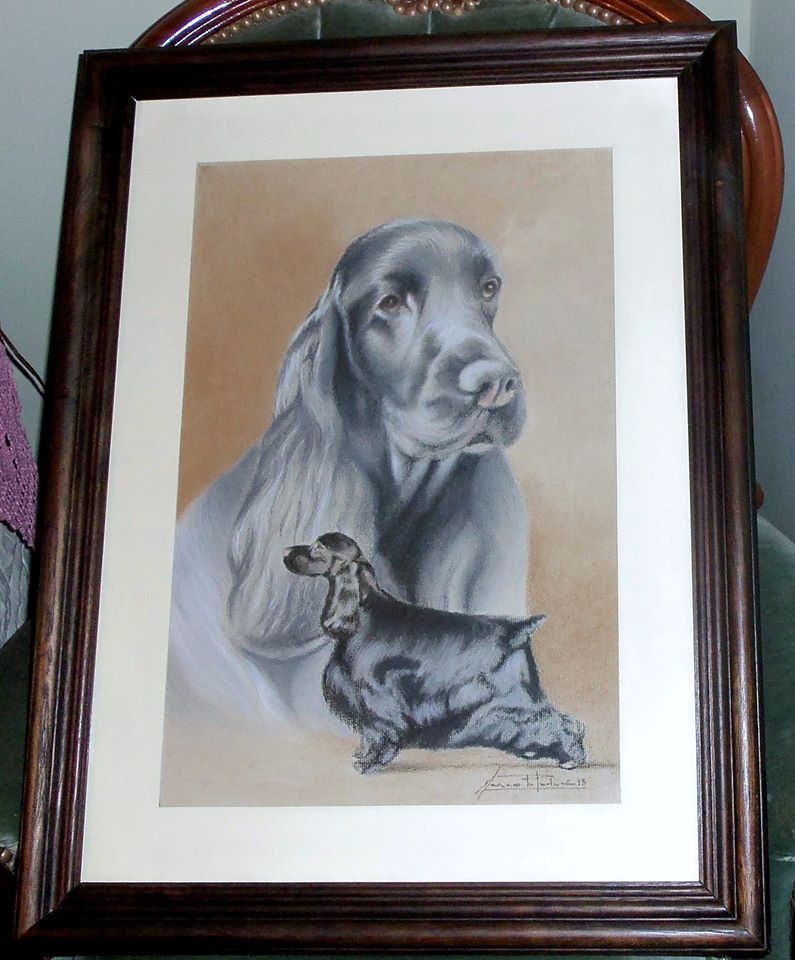
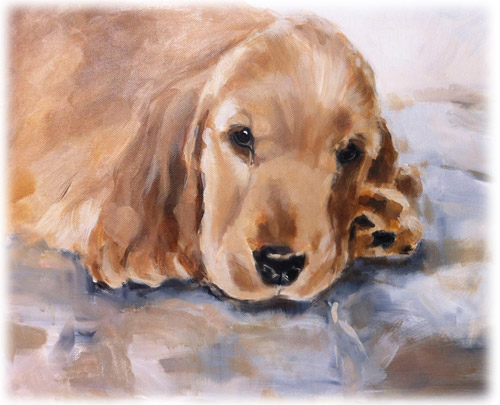
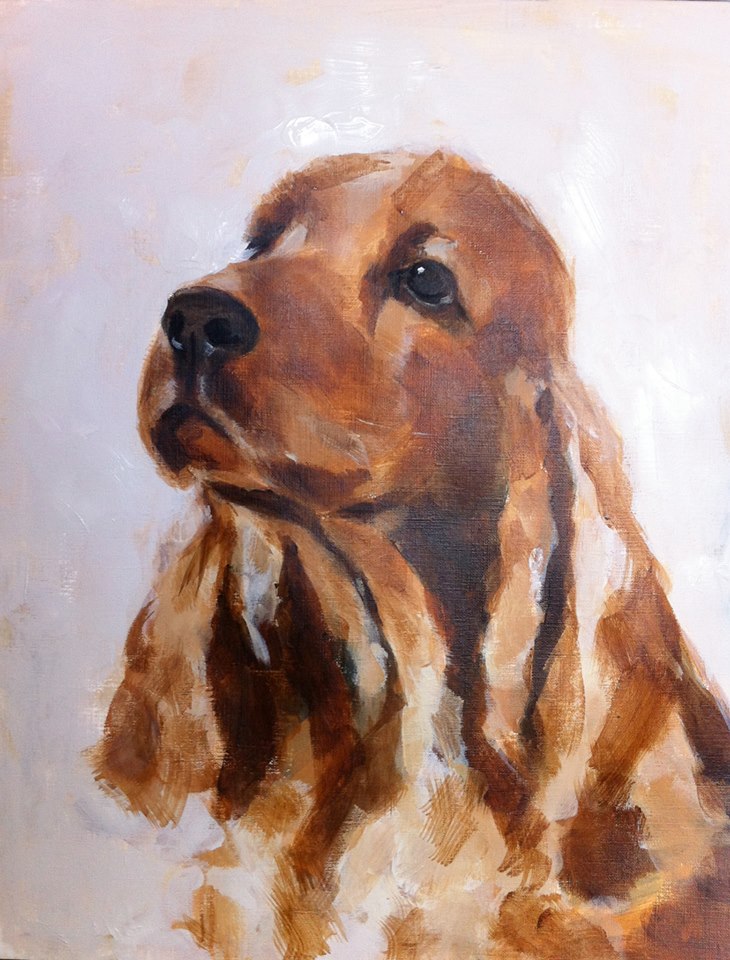
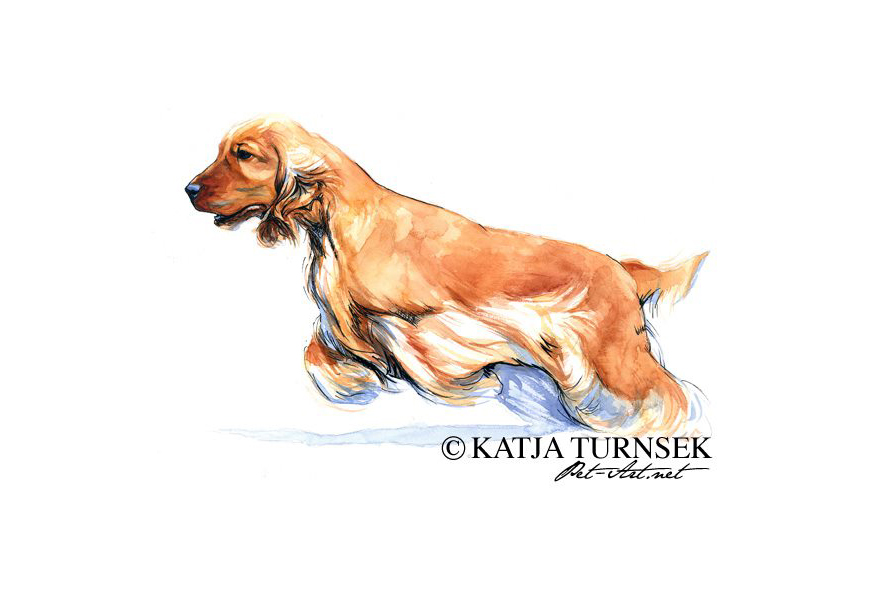
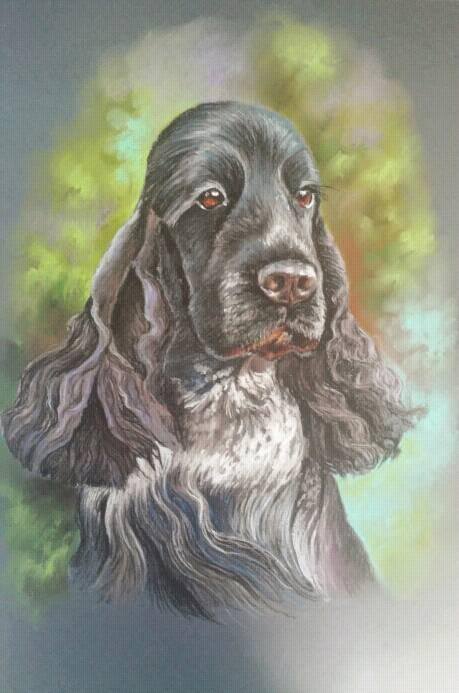
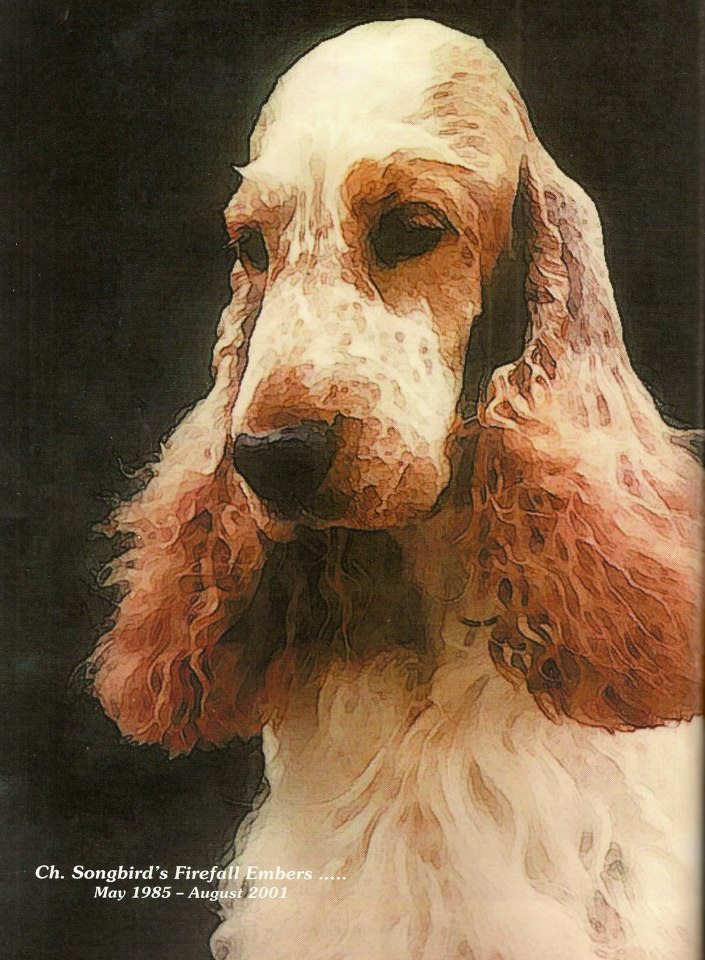
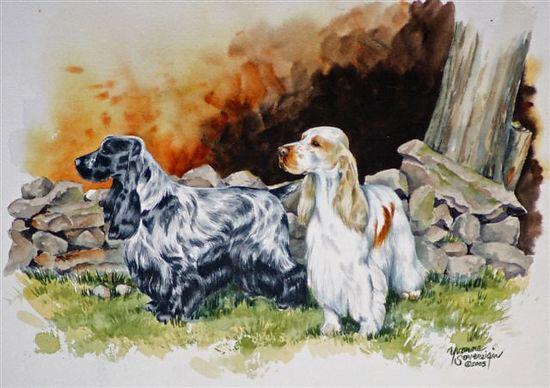
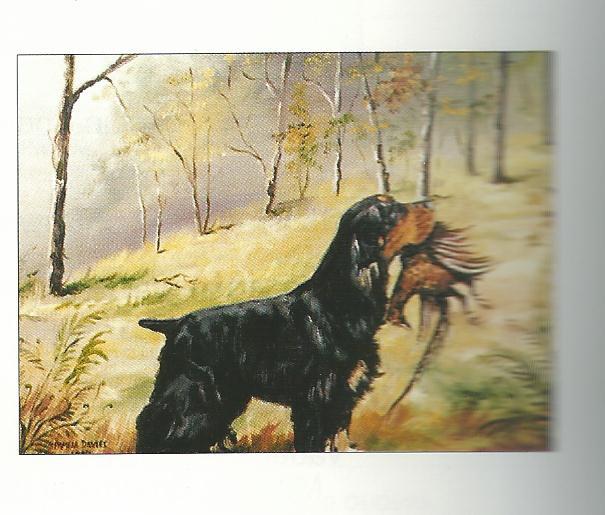
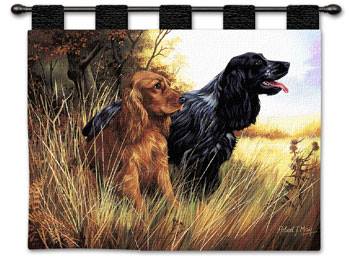
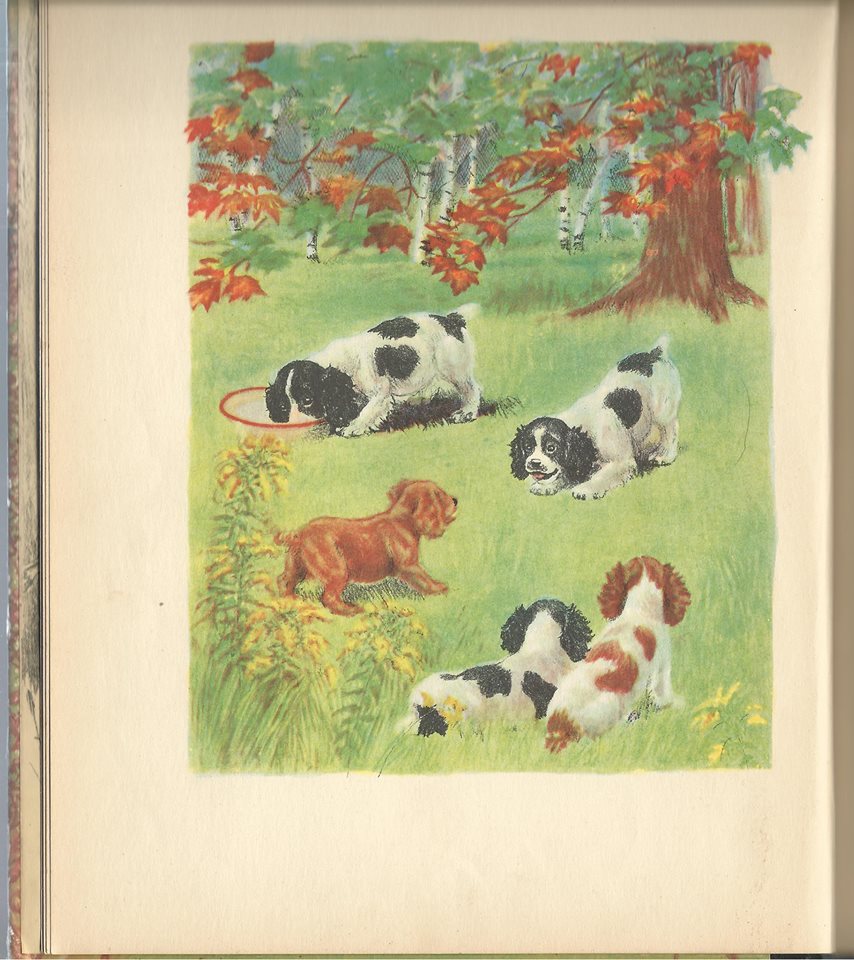
Paintings by Solveiga Chestres:
.jpg)

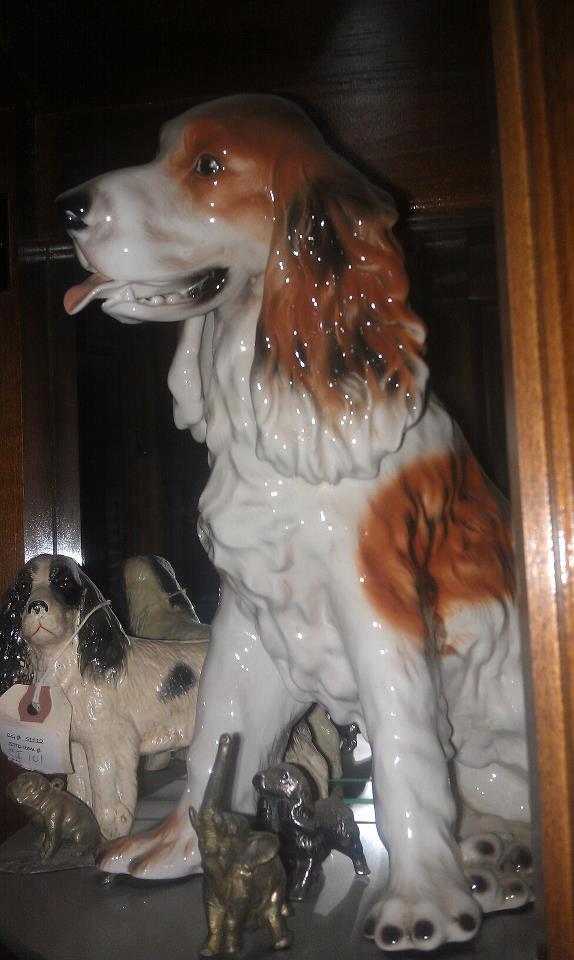
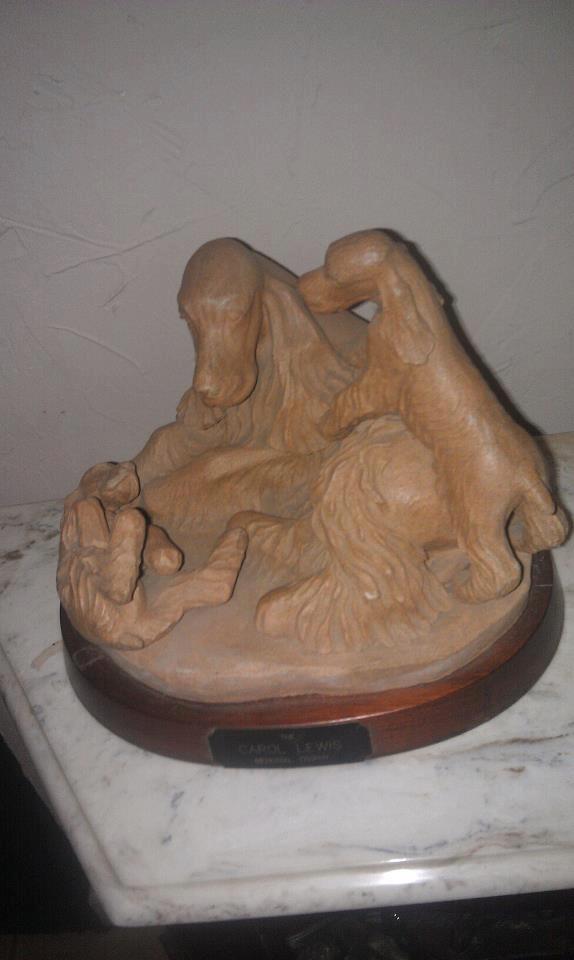
.jpg)
.jpg)
.jpg)
.jpg)
.jpg)